Pebble vs Plaster Pool Finish: Which Wins in Cape Coral?
Updated May 2026. Comparison based on Cape Coral and Lee County climate, water chemistry, and current 2026 pricing.
The Short Answer
For most Cape Coral pools, pebble wins on lifetime cost and salt resistance. Plaster wins on up-front price and smoothness. If you run a salt chlorine generator and plan to keep the pool another 10 years or more, pebble is almost always the right call. If your pool is a freshwater tablet-chlorinated cage pool and you are budget-driven, plaster still has a strong case.
Quick Comparison Table
| Property | Plaster / Marcite | Pebble (Tec, Sheen, Beadcrete) |
|---|---|---|
| Typical lifespan in Cape Coral | 7-10 years | 15-20 years |
| Cost per square foot installed | $4.00 - $5.50 | $7.00 - $11.00 |
| Total cost (600 sq ft pool) | $4,000 - $7,000 | $6,500 - $13,000 |
| Cost per year (amortized) | ~$575 - $875 | ~$430 - $720 |
| Salt chlorine generator friendly | OK with disciplined start-up | Best on the market |
| Feel underfoot | Very smooth | Textured (PebbleSheen is smoother) |
| Color options | Limited (mostly white, gray, blue) | Wide (blues, greens, blacks, tropicals) |
| Hides stains | No - shows everything | Yes - aggregate masks stains |
| Repair difficulty if chipped | Easy spot patch | Harder to match aggregate |
| Application time | 5-7 working days | 6-9 working days (acid exposure adds time) |
What Is Plaster?
Pool plaster is a white Portland cement and crushed marble dust mix applied in roughly a 3/8 to 1/2 inch coat over the bare gunite pool shell. The material has been the default Florida pool finish since the 1950s. Marcite is the most common brand-name variation of pool plaster, and most Cape Coral homeowners use the two terms interchangeably. A fresh plaster pool gives the bright reflective water look most people picture when they think of a backyard pool.
What Is Pebble?
A pebble pool finish is a cement-and-aggregate interior coating where the aggregate is a small natural pebble, river stone, or polished glass bead. The mix is troweled over the shell, then washed with a mild acid solution to expose the pebble face. That exposed aggregate is what gives a pebble pool its color depth, texture, and long lifespan. The original pebble product, Pebble Tec, launched in 1987. Today PebbleSheen, Beadcrete, PebbleFina, and PebbleBrilliance compete in the same premium space.
Lifespan: The Real Difference
In the Cape Coral climate, plaster typically lasts 7 to 10 years before it needs to be redone. Pebble typically lasts 15 to 20 years. That two-to-one lifespan ratio is the single biggest factor in the comparison, and it is mostly driven by how the two finishes hold up against three local conditions: salt chlorine generators, hard mineral-heavy water, and year-round UV exposure.
Plaster is mostly cement paste with marble dust aggregate. The cement paste is the weak point. Salt slowly eats it. Aggressive pH drift etches it. Calcium scale builds on it. Over time, the paste dissolves and the marble dust gets exposed, leaving a rough surface that is uncomfortable to walk on and impossible to clean. The result is a finish that needs to be redone in year seven or eight in most Cape Coral salt pools, and year ten or so in disciplined freshwater pools.
Pebble is mostly aggregate with cement paste binding it. The aggregate is chemically inert - salt, calcium, and UV do not touch it. So when the cement paste between the pebbles slowly erodes, the surface still looks and feels the same because the aggregate is what you see and touch. That structural difference is why a properly applied and started pebble pool comfortably hits 15 to 20 years in Cape Coral even on aggressive salt systems.
Cost Over Time: The Amortized Math
Plaster looks cheap on day one - $4,000 to $7,000 versus $6,500 to $13,000 for pebble on the same 600 square foot pool. But the math changes when you spread the cost over the actual lifespan. A $5,500 plaster job that lasts 8 years is $688 per year. A $9,500 pebble job that lasts 18 years is $528 per year. Pebble wins on amortized cost in most Cape Coral pools, even before factoring in the cost of more frequent drains, more frequent chemistry resets, and the inconvenience of doing the project again sooner.
Salt Pool Performance: This Is Where Pebble Pulls Away
A salt chlorine generator pool is the worst environment a plaster finish can live in. The salt cell generates chlorine by electrolysis, which pushes the pH up and concentrates dissolved salts in the water. Both effects attack the cement paste in plaster. We routinely see Cape Coral salt pools where the plaster is failing at year 5 or 6 instead of the 8 to 10 year range the manufacturer promised. Pebble shrugs this off. The exposed aggregate does not react to salt. The cement paste between the pebbles still slowly erodes, but the visible surface stays intact for 15 to 20 years. If you run a salt cell, pebble is the right call.
Feel Underfoot: Plaster Wins, But It Is Close
A brand new plaster pool is the smoothest interior finish you can put in any pool. Pebble is textured by definition. The original Pebble Tec from the 1990s is the most textured - some people find it noticeably rough on bare feet. Newer polished products like PebbleSheen, Beadcrete, and PebbleFina are dramatically smoother and feel closer to a beach pebble than to sandpaper. Most Cape Coral homeowners with young kids who want pebble for the lifespan choose PebbleSheen or quartz as the smoothness compromise.
Color and Visual Impact
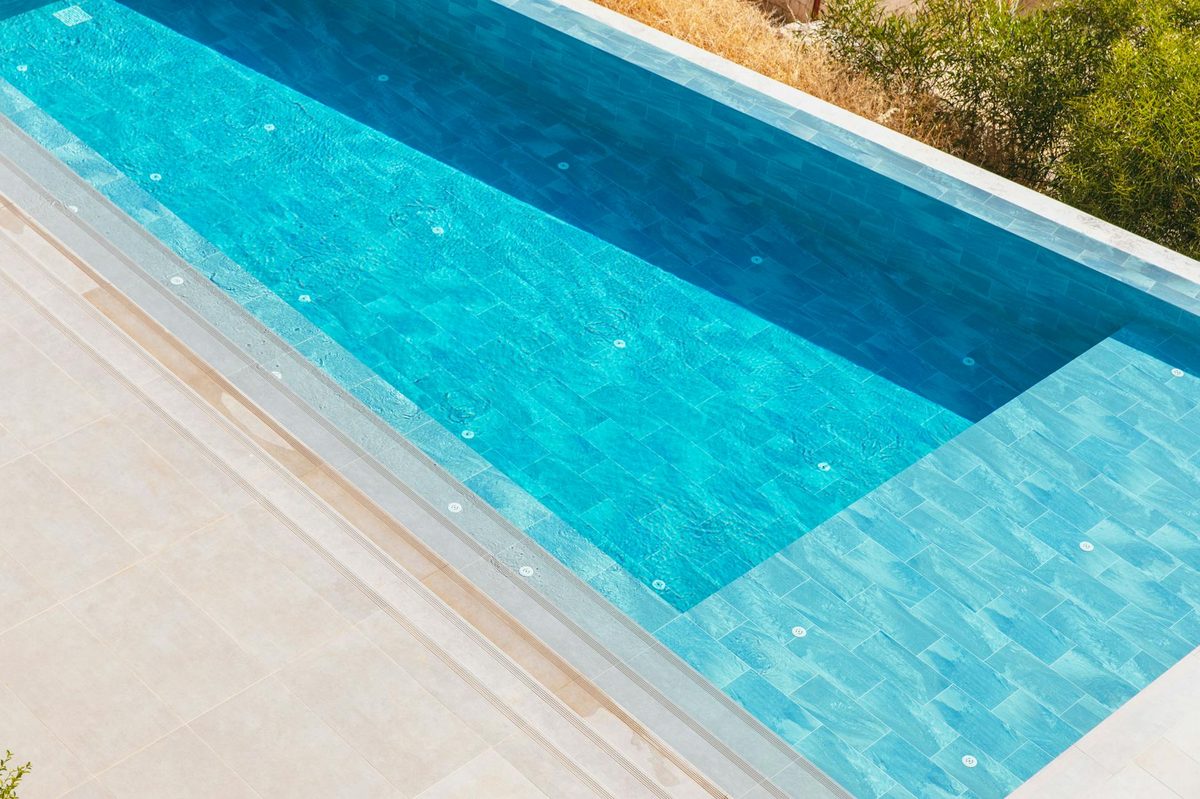
Plaster comes in three usable colors: white, gray, and blue. Pigmented black plaster exists but is rarely used in Cape Coral because the dark surface absorbs heat. Pebble comes in dozens of color blends, from Tahoe (a deep blue) to Caribbean (a turquoise) to gray, black, gold, and tropical mixes with shell or glass bead accents. The dramatic difference in water color matters in Cape Coral lanai pools where the screen-filtered light reads differently than open-sky water. Pebble lets you choose the water color, plaster mostly does not.
When Plaster Is Still the Right Call
Plaster is not dead. It is still the right finish for several specific Cape Coral situations:
- Freshwater tablet-chlorinated cage pools in Lehigh Acres or inland east Cape Coral where salt is not in play.
- Short-term ownership. If you are selling in 3 to 5 years, the lifespan advantage of pebble does not pay back.
- Tight budgets. Sometimes the $4,500 plaster job is what fits the wallet and that is fine.
- Very young kids with sensitive feet where even polished pebble feels too textured.
- Bright classic Florida look when the homeowner specifically wants the white reflective water aesthetic.
When Pebble Is the Right Call
- Any salt chlorine generator pool. Pebble lasts 2 to 3 times longer than plaster on salt cells.
- Canal-front Cape Coral pools where salt drift and humidity attack any surface.
- Long-term ownership (10+ years). Amortized cost favors pebble.
- Hard-water concerns. Pebble masks calcium staining far better than plaster.
- Color-driven design. Dark tropical water tones require pebble.
- Hurricane Ian repair pools where the shell has multiple injected cracks the heavier pebble coat helps visually mask.
The Quartz Middle Ground
Worth mentioning: quartz finishes sit between plaster and pebble on price, lifespan, and smoothness. Diamond Brite and StoneScapes run $5,500 to $9,000 for a 600 square foot Cape Coral pool, last 10 to 15 years, and feel almost as smooth as plaster. For homeowners who do not want plaster but cannot stretch the budget to pebble, quartz is the sensible middle path. Many Cape Coral resurface jobs we quote end up landing here.
What the National Plasterers Council Says
The National Plasterers Council, the industry body for pool finish standards, recognizes plaster, quartz, and pebble all as legitimate finish categories. The NPC 28-day start-up chemistry program applies to all three. The difference in lifespan is not about which one is "better" in some abstract sense - it is about which one is engineered for the chemistry exposure of your specific Cape Coral pool. NPC data consistently shows pebble outlasting plaster by 2-to-1 in saltwater applications.
Our Honest Recommendation for Cape Coral Pools
- Salt pool, long-term owner: Pebble. Easy call.
- Salt pool, short-term owner: Quartz. Modest lifespan upgrade over plaster, fraction of pebble cost.
- Freshwater inland pool, budget-conscious: Plaster. Still the right answer.
- Freshwater inland pool, long-term owner: Quartz. Better lifespan than plaster, smoother than pebble.
- Custom color design priority: Pebble. Only finish with real color depth.
- Smooth feel priority: Plaster or polished quartz.
Ready to Decide?
The right next step is a free on-site visit. We bring full color sample boards for plaster, quartz, and pebble and you compare them against your actual deck color and screen color in real Cape Coral daylight. Color reads totally different in person than on a website. No deposit, no obligation.
Related reading: 2026 pool resurfacing cost guide for Cape Coral | how often to resurface a pool in Florida | pebble pool finish service page